
 Home
Home  Apps
Apps  Games
Games  Windows
  Terms of Service
  Cookies & Privacy Policy
  About us
Moodle

 4.6
4.6 10,000,000+ Downloads
5.1.0 Version

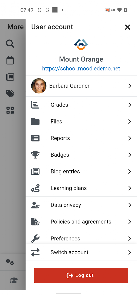
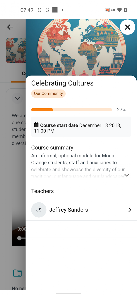
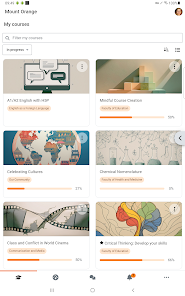

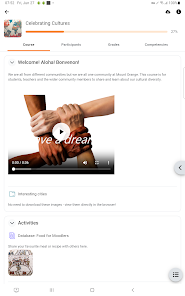

Information
- Category: Education
- Price: free
- Age Rating: Everyone
- Available on: /
- Developer: Moodle Pty Ltd.
- Updated on: May 29, 2026
Moodle is a popular learning management system (LMS) that is used by instructors to create and deliver online courses. It is a free and open source software that is available for anyone to use. The Moodle community includes over 100,000 users in 200 countries.Moodle has many features that make it a powerful LMS. It allows instructors to create and deliver courses using a variety of materials such as text, audio, video, and quizzes. Moodle also provides tools for collaboration, communication, and assessment.Moodle is easy to use and has a wide range of documentation and support available. It is a good choice for instructors who want to create and deliver online courses.
Features & Highlights
Real Experience Using Moodle
Application Scenarios
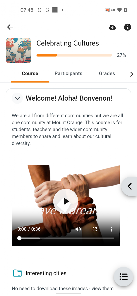
My journey with Moodle began when I enrolled in an online course while balancing my job. The flexibility that Moodle offers allowed me to attend lectures and complete assignments at my own pace. I used it to submit my coursework, participate in discussion forums, and access a wide array of learning materials. Additionally, as a part-time educator, I have been using Moodle to set up and manage my classes, providing resources and assessments for my students, which has made my teaching process smoother and more organized.
User Experience
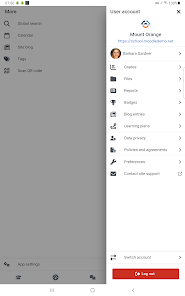
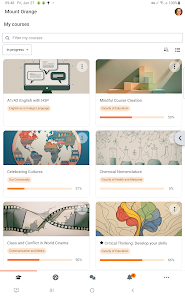
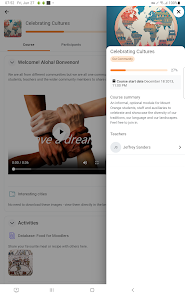
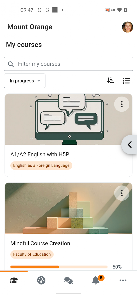
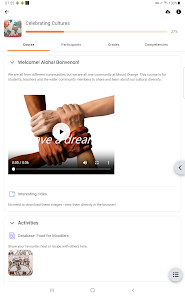
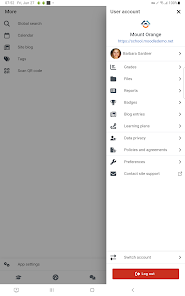
The user interface of Moodle is quite intuitive, which I found appealing from the get-go. Navigating through the dashboard is straightforward, with all the essential tools easily accessible. I particularly enjoy the workflow of creating courses; the drag-and-drop functionality for adding resources is a notable highlight. The performance has been reliable as well, with minimal loading times and no significant glitches during my usage. Overall, the experience has been positive, empowering me to manage my learning and teaching effectively.
Pricing
Moodle is an open-source platform, which means that anyone can download and use it for free. However, if you are looking for premium features or support, there are costs associated with hosting and technical assistance. Many institutions opt for Moodle’s paid services to enjoy enhanced features and dedicated support, which can be a worthwhile investment for a seamless experience.
Updates & Support
The Moodle community is incredibly active, providing ongoing updates and improvements to the platform. I have noticed regular enhancements that improve functionality, making the app feel fresh and robust. In terms of support, the official Moodle forums are a treasure trove of information, where users can seek help and share solutions. I’ve found the community to be responsive and helpful, which is invaluable when troubleshooting issues.
Security & Privacy Review
Moodle takes security and privacy seriously, which is a reassuring factor for American users. The app is available on official app stores, such as the App Store and Google Play, ensuring that you’re downloading a legitimate version. When it comes to registration, the platform requires basic personal data, including your name and email address, which is common for educational tools. I appreciate that Moodle does not rely heavily on ads, and it has clear privacy policies that outline how user data is handled. There’s no intrusive tracking behavior that compromises user privacy, allowing me to focus on learning and teaching without worries about my information being misused.
Pros 
-
 User-friendly interface enhances learning engagement
 - Customizable features cater to diverse educational needs
- Supports various content formats for versatile teaching
- Strong community support fosters collaboration and innovation
- Mobile accessibility allows learning anytime, anywhere
Cons 
-
 User interface can be confusing for newcomers
 - Limited customization options for themes
- Performance issues with large courses
- Steeper learning curve for instructors
 Google Play
  App Store
 User Reviews
(208K Reviews) Michael McDowell2026/02/18
Really good, one problem. I've used other similar apps for school before, this one is by far the best and much more convenient than using a browser on mobile. Clean layout, responsive, intuitive. The main problem is writing in the app and copy pasting text into submission boxes with Google Docs. It lacks many writing tools and features the PC web version has. Also, BOTH VERSIONS ARE UNABLE TO CHANGE FONT SIZE EASILY!!! You have to play with heading sizes for some sick twisted reason. Evil
- Tyler2020/11/23
Since the last update it has lost all of it's convenience. You used to be able to choose whether to insert images from the camera or your file browser, now it redirects you to the file explorer every time. The UI has downgraded, looking like a worse version of the mobile website. The app has lost all of it's convenience over the mobile or desktop site.
- Gigglebaggle2020/09/15
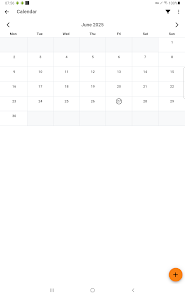
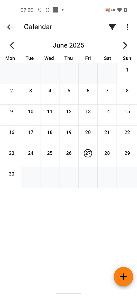
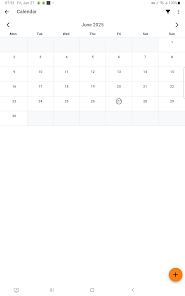
The calender feature is both overwhelming and useless. For some reason they made everything with a due date red, and it doesn't show whether you turned it in until you open the assignment. Also, it makes no attempt to tell users when an assignment is overdue. Instead, it just waits for you to open the overdue assignment and then yells at you for being bad at organising.
- Francisca Fadairo2020/07/25
Moodle is a good app to use for posting assignments and even taking tests. It's a simple user friendly interface that I would recommend. Although it would be nice if the developers could add more font type and size options, as well as more flexible with the fonts; for example if I say something like 'Name: Francisca Fadairo' the app only allow one font for the whole line. Aside from that little suggestion it's great.
- Happiness Majuta2026/04/30
I enjoy using the Moodle app because it makes my learning experience more organized, flexible, and engaging in a way that suits my daily routine as a student. One of the things I appreciate most is how all my course materials are available in one place, which saves me time and reduces stress because I don’t have to search through different platforms or papers to find what I need. Whether it is notes, assignments, announcements, or discussion forums, everything is clearly structured, and I can ea
Review Source: Google Play store public user reviews.
FAQ
Does Moodle collect my personal data?
Moodle may collect personal data as part of its functionality, such as user profiles, activity logs, and course interactions. However, data collection practices depend on the institution or organization using Moodle and their privacy policies.
Does Moodle offer a free trial or free version?
Moodle itself is free to download and use since it is open-source software. However, institutions may charge for hosting services, support, and additional features. Some Moodle-based services may offer trials or free versions, depending on the provider.
Does Moodle require an internet connection?
While Moodle is primarily an online platform and requires an internet connection for full functionality, some features may be available offline through mobile apps, allowing users to access certain content without being connected to the internet.
How can I contact support or send feedback for Moodle?
You can contact Moodle support through their official website, where you can access documentation, community forums, and support tickets. Feedback can also be submitted through the same channels, allowing users to share their experiences and suggestions.
How do I manage or cancel my Moodle subscription?
To manage or cancel your Moodle subscription, you can log in to your MoodleCloud account and navigate to the billing section. There, you can update your payment information, upgrade your plan, or cancel your subscription as needed.
How to use Moodle
Can I use the Moodle app offline?
Yes, the Moodle app allows you to download content for offline access, enabling you to study without an internet connection.
How can I contact customer service for the Moodle app?
You can reach Moodle customer service through their official website or support portal for assistance.
How can I report an issue with the Moodle app?
You can report issues through the support section of the Moodle website or by contacting customer service directly.
How do I log in to the Moodle app?
Open the app, enter your credentials (username and password), and tap 'Log in' to access your courses.
How do I reset my password for the Moodle app?
Use the 'Forgot password?' link on the login screen to receive instructions for resetting your password via email.
What's New
- What's New & Improvements• Enhanced Visibility Settings: Full support for the new 'Site home' and 'My courses' visibility configurations to keep your dashboard clean and organised.• Course Forced Language: Courses with a mandatory language setting will now automatically apply it to the app interface for a seamless, localised learning experience.• Advanced Customisations: Better customisation capabilities, giving administrators and teachers greater flexibility to tailor the app experience.
Similar Apps












You May Like

Canvas Student
Instructure, Inc.
4.7
Starfall.com
Starfall Education Foundation
4.0

Planetary Hours
Broer Apps
4.4
Nibble: Your Bite of Knowledge
KREMITAL LIMITED
4.4

phyphox
RWTH Aachen University
4.8

Talkpal - AI Language Learning
Talkpal, Inc.
4.3

Nerd AI - Tutor & Math Helper
Deep Flow Apps
4.6

Language Learning - Ling
Ling Learn Languages
4.5

Luzia: Your AI Assistant
FACTORIA ELCANO SL
4.5

Turbo AI - Notetaker
Turbo AI
4.8

Schoox Classic
Schoox, Inc.
3.9

SplashLearn: Kids Learning App
StudyPad, Inc.
4.7